
Getting Started
A 10-minute full-body stretching routine for flexibility and daily mobility
Follow ten movement slots with explicit side changes and transitions in a 600-second full-body routine, with illustrations and a player.
A ten-minute session needs room for changing sides and moving between standing, seated and floor positions. This sequence uses ten 50-second movement slots, ten seconds to prepare, and nine ten-second transitions: 600 seconds in total.
Open the illustrated routine and player to see every movement before you begin. The timer is a guide, not a reason to hurry or stay in an uncomfortable position.
Before you start
Warm up with gentle movement first; the preparation countdown is setup time, not a warm-up. Have a stable chair, wall and comfortable floor space available. This sequence includes kneeling and lying down. If those positions do not suit you, compare the standing and seated options instead.
Move within a comfortable range, keep breathing and stop if a movement causes pain. If an injury or health condition makes a movement uncertain, ask a qualified professional about an appropriate adaptation.
The ten movements
Each slot lasts 50 seconds. Where two sides are indicated, use 24 seconds on the first side, two seconds to change, and 24 seconds on the second. A slot is available movement time, not a requirement to hold continuously; release or pause when needed.
- Chest opener standing.
- Wrist flexion, using the kneeling setup shown in its guide.
- Lunge, both sides.
- Leaning calf, both sides, with wall support.
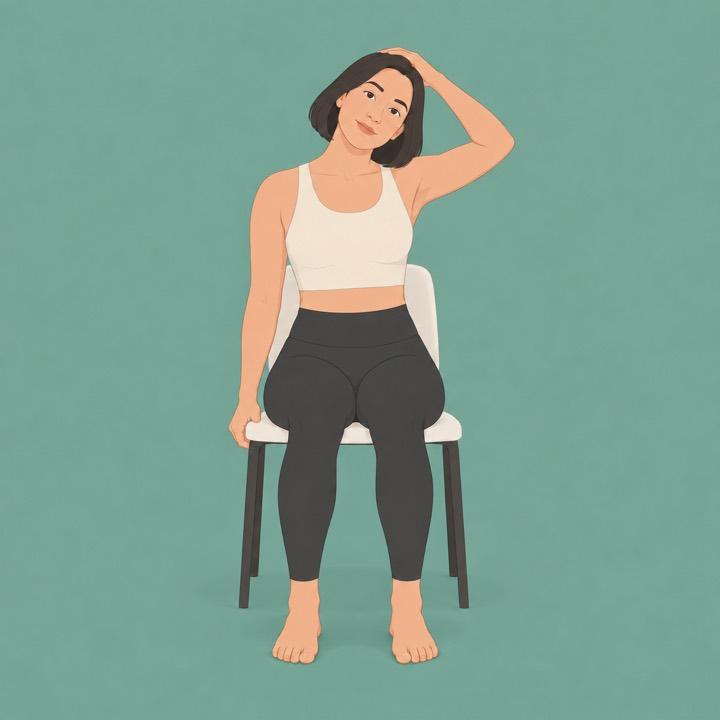
- Neck laterals, both sides, seated.
- Shoulder rolls seated, moving slowly rather than holding one position.
- Side bend seated, both sides.
- Seated hamstring, both sides.
- Lying hamstring, both sides.
- Single knee-to-chest, both sides.
The routine page provides the illustrations, individual movement links, side timing and instructions. Take longer than the allotted transition if you need it: pause the player instead of rushing to the next position.
Does ten minutes include both sides?
Yes. Bilateral movement slots include both sides and the internal side change. The ten-second transitions occur between movements, and there is no final transition after the last one. Warming up beforehand is outside the ten-minute total.
What if a movement does not fit?
Inspect the movement's setup and gentler options before starting. Skip an unsuitable movement or choose a different routine; completing the exact clock time is less important than moving comfortably. Standing and seated sessions are different sequences, not identical replacements for every floor exercise.
How often should I use it?
Choose a schedule that fits your activity and comfort rather than treating this page as an individual prescription. This sequence is general movement content, not treatment for pain or a promise of a particular flexibility result.
General stretching guidance
The American Heart Association's flexibility guidance explains preparation, comfortable movement and general hold durations. Those principles do not independently validate this particular ten-movement sequence.
For a different session length, try Fit my time. You can also explore exercise topics or use the AI routine generator for everyday preferences; generated suggestions are not a professional assessment.