Body Area
Quadriceps Stretches for the Front of Your Thighs
Use standing, side-lying, and kneeling quadriceps stretches with options for balance and knee comfort.
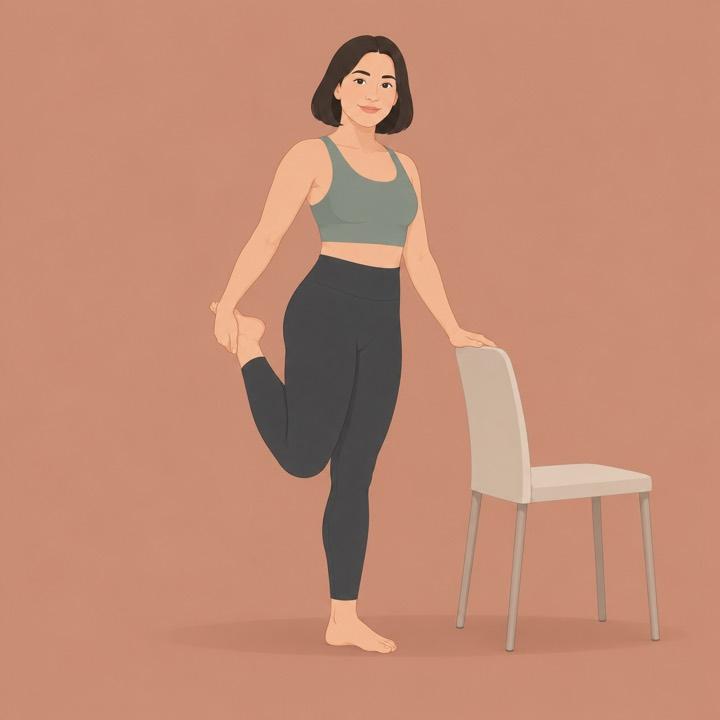
Use standing, side-lying, and kneeling quadriceps stretches with options for balance and knee comfort. It is designed for the front of the thighs after active days, with a clear goal: stretch the quadriceps without pulling hard on the ankle.
Quick answer
A useful starting point is 8 minutes at an easy intensity. Move into each position until you notice mild tension, keep breathing, and leave the pose if the sensation becomes sharp, numb, or painful. You do not need to reach a particular shape for the stretch to count.
At a glance
- Time: about 8 minutes
- Equipment: none; a chair, wall, or cushion is optional
- Intensity: gentle to moderate
- Best for: the front of the thighs after active days
- Main idea: stretch the quadriceps without pulling hard on the ankle
Why this routine fits the front of the thighs after active days
A useful routine is more than a list of poses. The order should match the moment. Here, the sequence begins with an easy orientation movement, shifts toward the areas most likely to need attention, and finishes with a position that makes it natural to slow down. That structure supports the real goal: stretch the quadriceps without pulling hard on the ankle.
The pose illustrations below are landmarks rather than targets. Bodies have different proportions and histories, so your version may look different. Use a wall, chair, or cushion whenever support lets you breathe and pay attention more easily.
A 8-minute sequence to try
Use this as a flexible outline rather than a performance test. Spend roughly 60 seconds exploring each movement, including both sides when relevant, and shorten any position that feels less useful today.
1. Standing quad
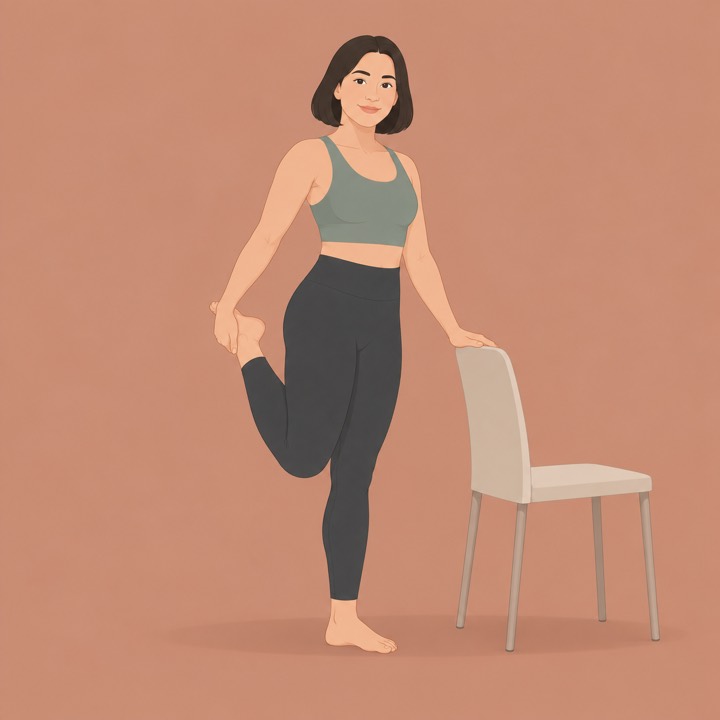
Why it appears here: This movement gives the sequence a standing option that brings attention to thighs, hip flexors. It adds a different direction or level from the movement before it, which helps the routine feel rounded rather than repetitive.
How to approach it: Set up near a wall if balance is a concern. Enter the shape gradually, keep your feet grounded, and use a smaller range whenever you cannot breathe normally.
Suggested time: about 60 seconds total, shared between both sides. Leave sooner if the position stops feeling calm or controlled.
2. Lying quad stretch
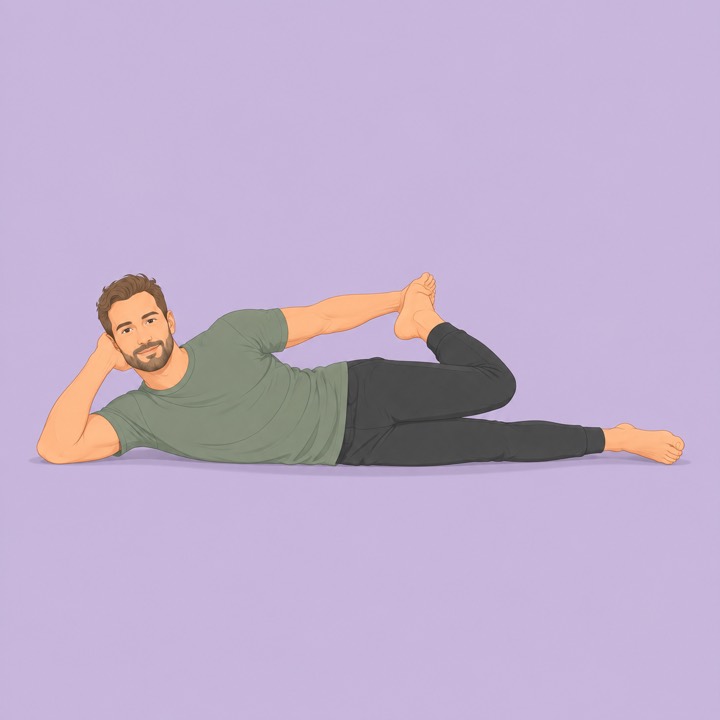
Why it appears here: This movement gives the sequence a floor option that brings attention to thighs, hip flexors. It adds a different direction or level from the movement before it, which helps the routine feel rounded rather than repetitive.
How to approach it: Use a mat, folded towel, or cushion to make contact with the floor comfortable. Take your time getting down and back up, especially when the routine follows a long inactive period.
Suggested time: about 60 seconds total, shared between both sides. Leave sooner if the position stops feeling calm or controlled.
3. Quad stretch floor
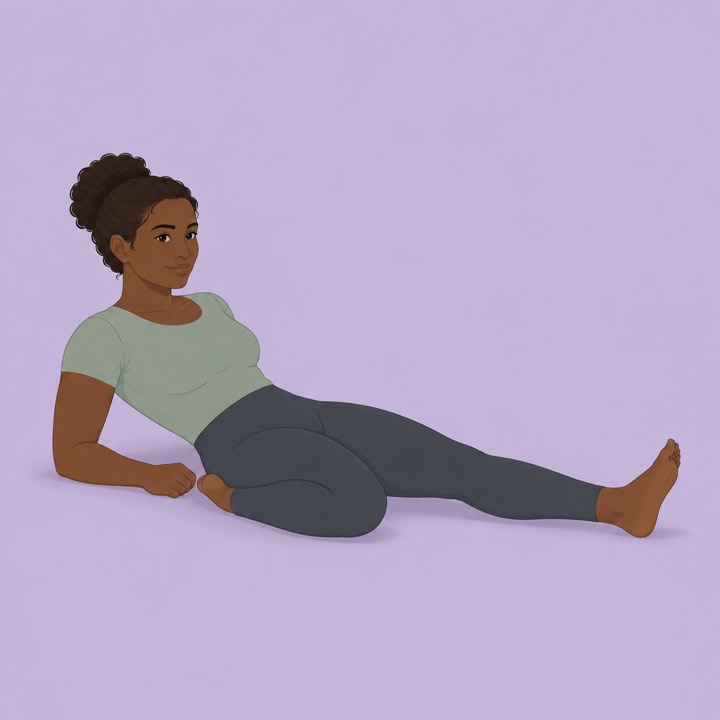
Why it appears here: This movement gives the sequence a floor option that brings attention to thighs, hip flexors. It adds a different direction or level from the movement before it, which helps the routine feel rounded rather than repetitive.
How to approach it: Use a mat, folded towel, or cushion to make contact with the floor comfortable. Take your time getting down and back up, especially when the routine follows a long inactive period.
Suggested time: about 60 seconds total, shared between both sides. Leave sooner if the position stops feeling calm or controlled.
4. Kneeling quad
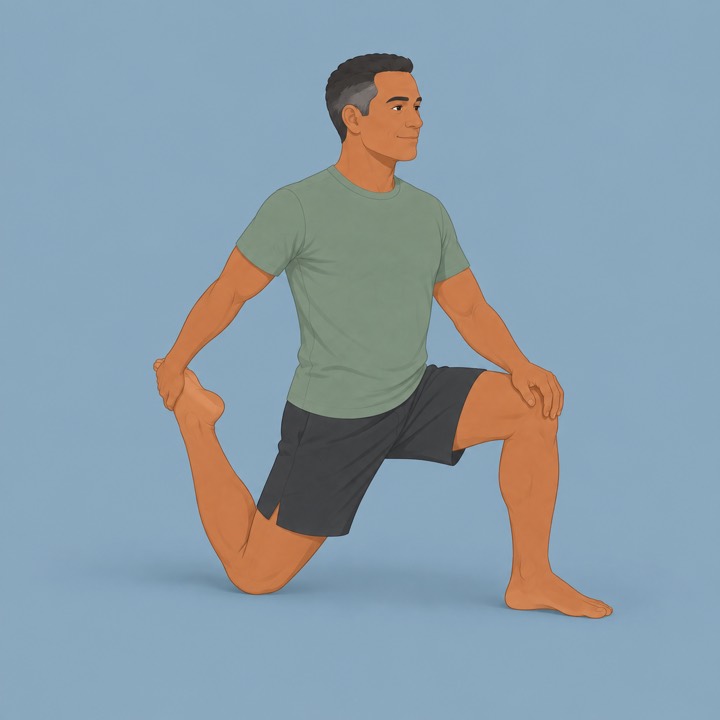
Why it appears here: This movement gives the sequence a floor option that brings attention to thighs, hip flexors. It adds a different direction or level from the movement before it, which helps the routine feel rounded rather than repetitive.
How to approach it: Use a mat, folded towel, or cushion to make contact with the floor comfortable. Take your time getting down and back up, especially when the routine follows a long inactive period.
Suggested time: about 60 seconds total, shared between both sides. Leave sooner if the position stops feeling calm or controlled.
How to get more from the routine
Keep the session specific to its purpose: stretch the quadriceps without pulling hard on the ankle. Begin with the easiest version you can repeat. A smaller range with steady breathing is usually more useful than a deeper position that makes you brace, hold your breath, or lose balance.
Progress one variable at a time. You might add one session per week, hold a comfortable pose slightly longer, or explore a little more range. Avoid increasing duration, intensity, and frequency all at once. That makes it easier to notice what actually helps.
Common mistakes to avoid
- Bouncing or using momentum to force a larger range.
- Treating pain as proof that a stretch is working.
- Holding your breath or tightening your jaw and shoulders.
- Comparing your position with an illustration instead of responding to your body.
- Using stretching as a substitute for medical care when symptoms are severe, persistent, or unexplained.
Safety and comfort
Stretching should create mild, tolerable tension rather than pain. Stop with sharp pain, tingling, numbness, dizziness, loss of strength, or symptoms that travel into an arm or leg. If you are recovering from an injury, surgery, pregnancy-related concern, or a condition that affects balance or joints, ask a qualified clinician which movements fit you.
Because this guide cannot account for your medical history, treat it as general movement education. A clinician or physical therapist can help adapt stretching around an injury, surgery, neurological symptoms, joint instability, or persistent pain.
Frequently asked questions
Is this guide suitable for beginners?
Yes, if you use a comfortable range, move slowly, and choose the easier modification for each exercise. Skip any movement that causes pain or does not fit your health needs.
How often can I use this 8-minute routine?
You can use it whenever it feels helpful and comfortable. Start with two or three sessions a week, then adjust the frequency based on your schedule, activities, and how your body responds.
Do I need to warm up first?
For a quiet flexibility session, begin with easy movement and gradually increase the range. Before vigorous exercise, use an activity-specific warm-up with dynamic movement rather than relying on long, passive holds alone.
Sources and further reading
- Flexibility exercise and stretching — American Heart Association
- Flexibility exercises — NHS
- Physical Activity Guidelines for Americans — U.S. Office of Disease Prevention and Health Promotion
What to do next
Choose another guide from the Stretchlet stretching blog, explore a ready-made stretching routine, or use the Stretchlet app to build a session around your available time and preferences.