
Standing movement
Power pose
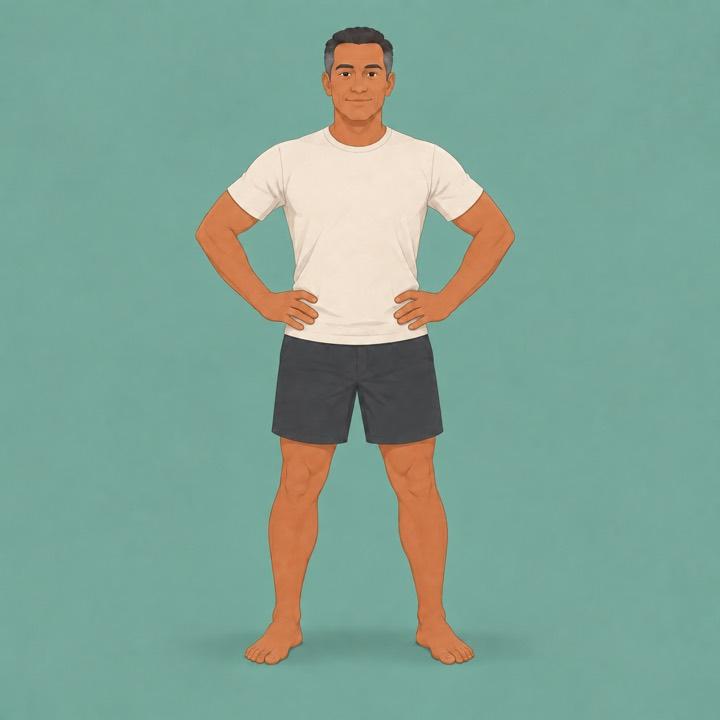
Power pose is a standing movement commonly used to explore comfortable range through posture, relaxation. This web guide explains where it may fit in a routine and how to approach it without treating the illustrated shape as a target.
The quick read
What is Power pose?
Power pose is a standing movement used in stretching and mobility sessions. People often include it when they want to bring attention to posture, relaxation. Its value comes from how it fits the person and the routine, rather than how closely the body matches a picture.
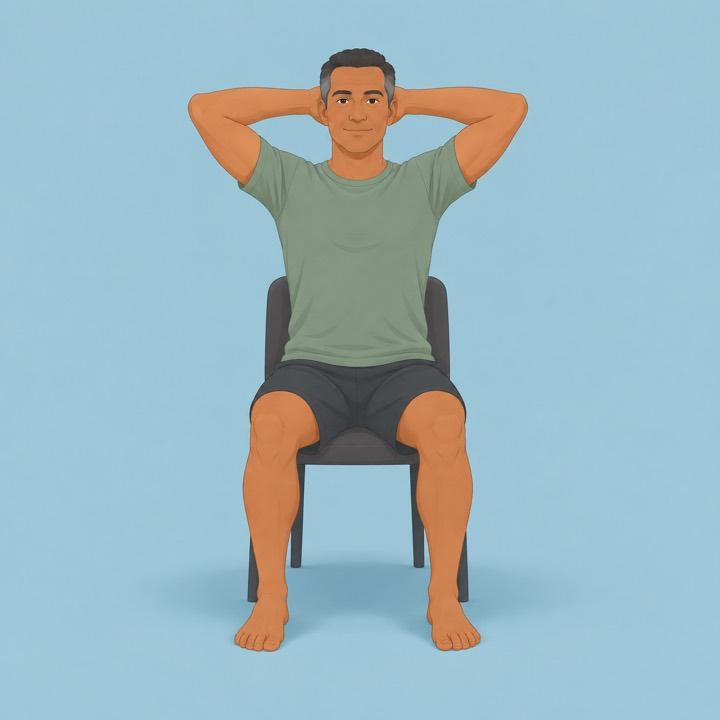
The illustration offers orientation. Use your own comfortable range and leave room to breathe normally.
Use it well
How to approach the movement
A wall or sturdy chair can make a standing exploration feel more secure. Start with a stable stance, then make the movement smaller whenever balance becomes the main challenge.
Enter gradually, pause where the sensation is mild and clear, and come out with the same control. Bouncing, forcing, or holding your breath usually adds effort without making the movement more useful.
Programming
Where it can fit in a routine
This pose can sit inside a body-area session, a short work break, or a longer full-body sequence. Before vigorous activity, favor active movement and an activity-specific warm-up. In a quiet flexibility session or cool-down, a relaxed hold may fit better.
Start with one comfortable round. Revisit the pose on another day before deciding whether a longer hold or wider range is useful.
Safety
When to choose another option
Stop with sharp pain, tingling, numbness, dizziness, weakness, or symptoms that travel. If you are managing an injury, recent surgery, pregnancy-related concern, joint instability, or persistent pain, ask a qualified clinician how this movement should be adapted.
Explore nearby
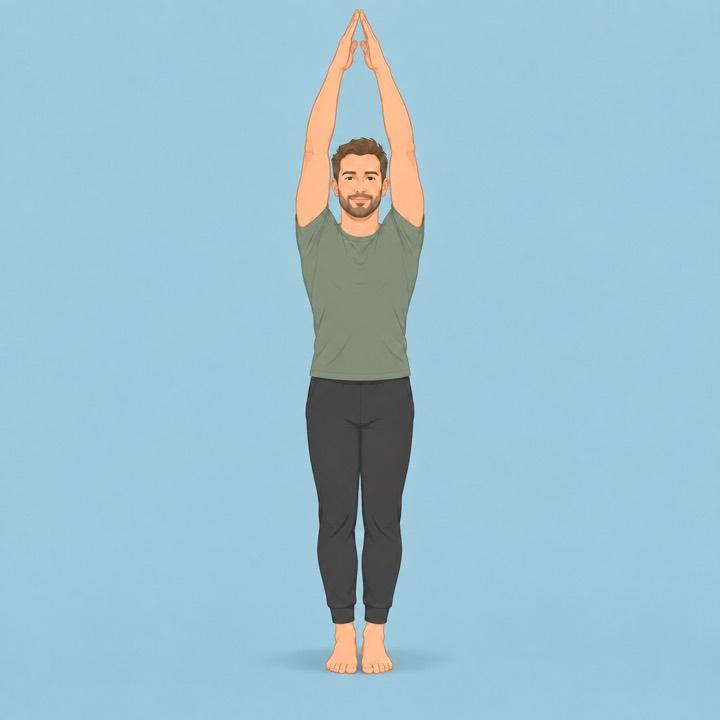 Upward salute
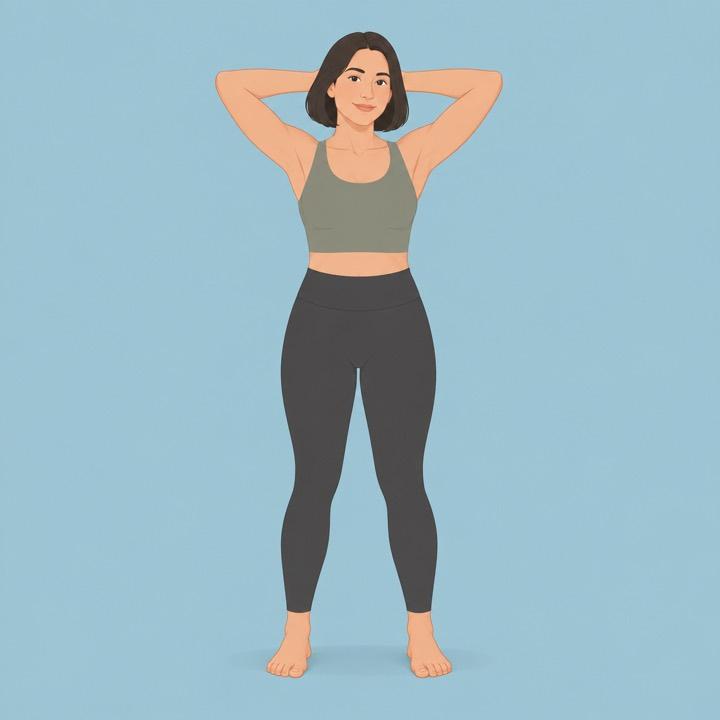 Chest opener standing
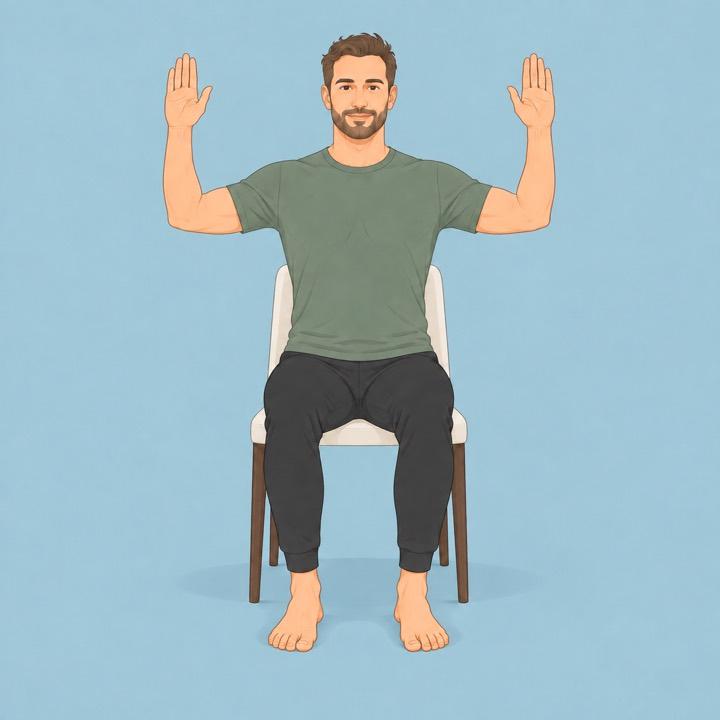 Cactus Arms seated
 Chest opener seated